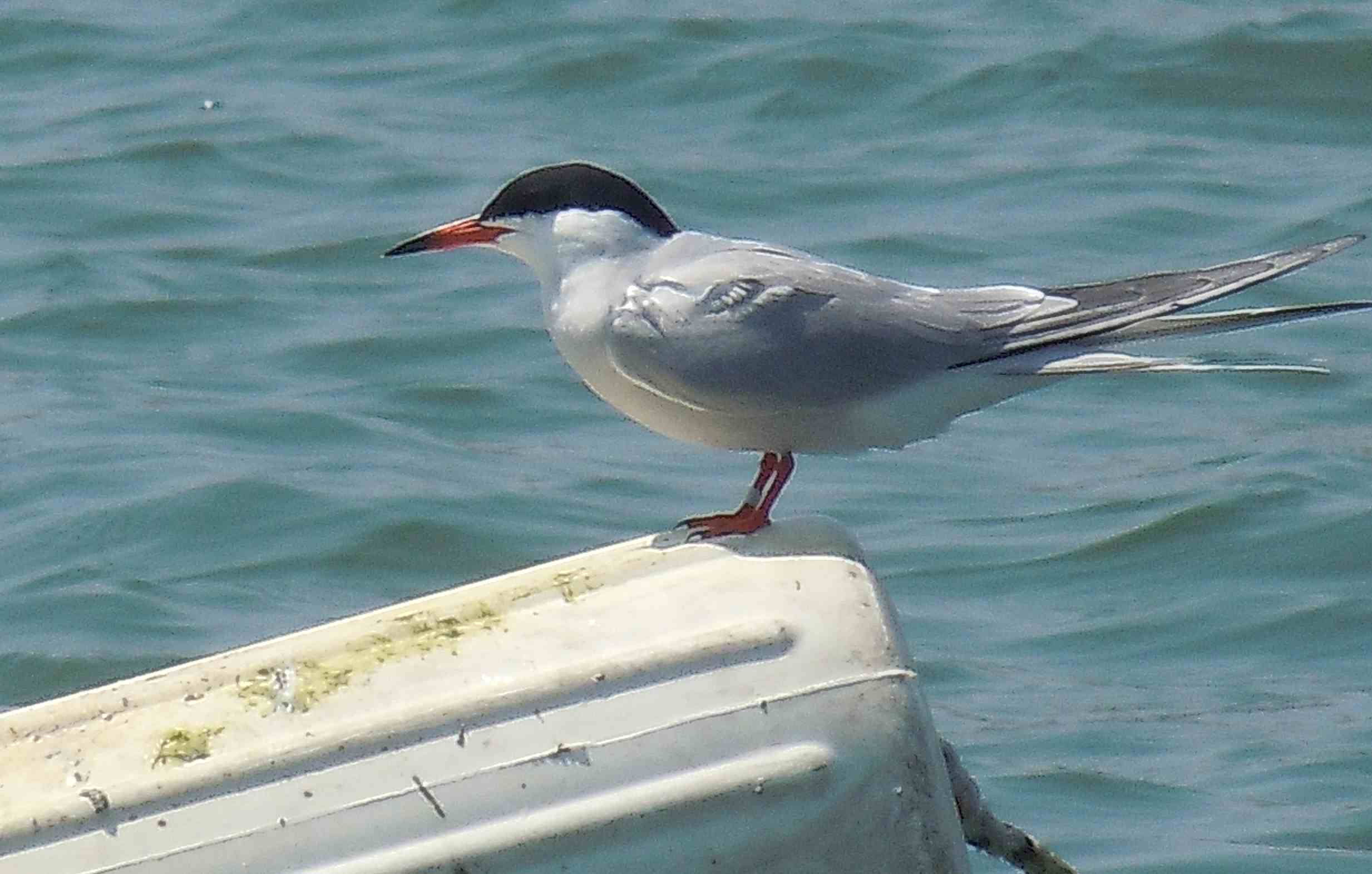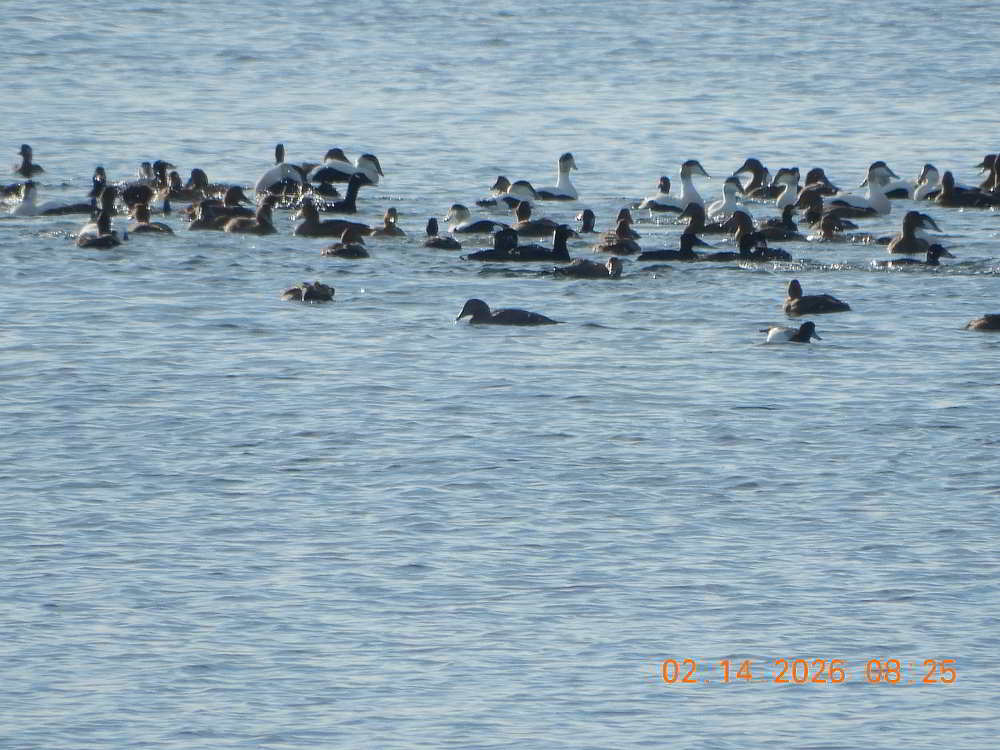
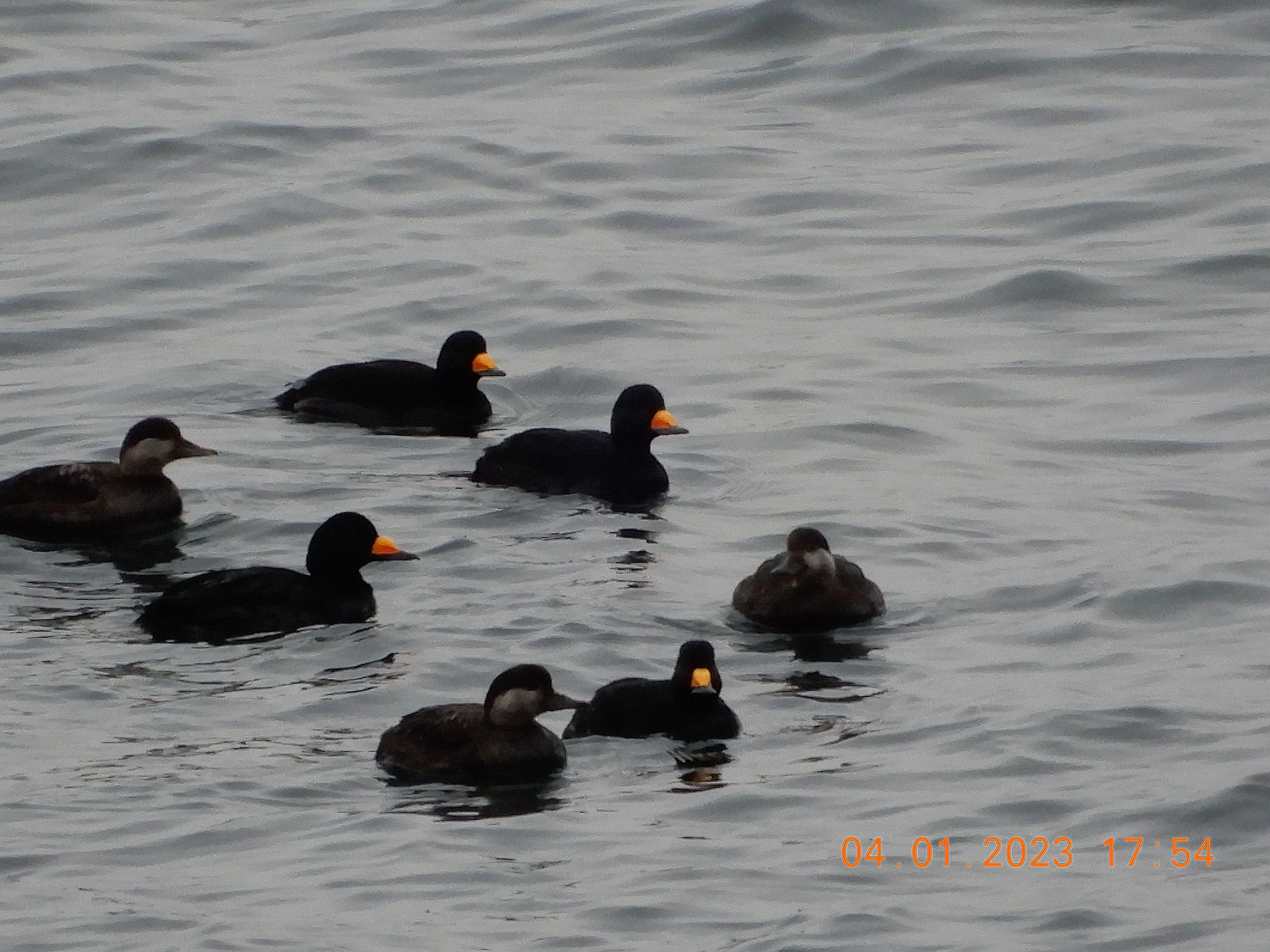
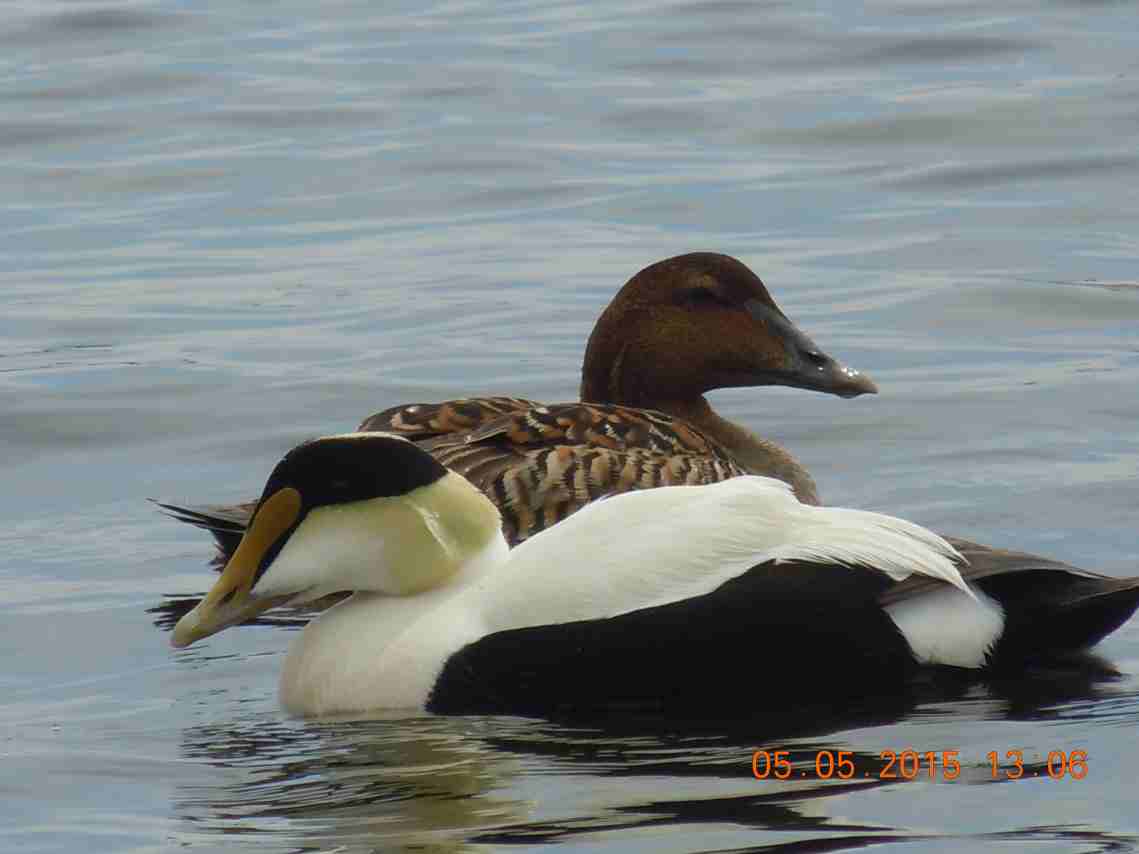
During the winter months Black Scoters and Common Eiders are frequently seen along the Back and South shores. They dive for mussels and crabs along the shore usually in groups of 10-100. One may notice that the Black Scoters feed synchronously, all diving at the same time - resembles a water ballet. When they are not diving, they may whistle – delicately. The Common Eiders are more independent feeders, diving hit or miss. Instead of a delicate whistle, they make a grunting noise.
In smaller groups on the waters circling Peaks Island, one may see Surf and White-winged Scoters, Long-tailed Ducks, Common and Barrow's Goldeneyes, Buffleheads, Red-breasted Mergansers and—on rare occasions—the geometrically patterned Harlequin Ducks.
In the winter sea ducks are communal (seen in either small or large groups) as compared to the breeding season when individual pairs choose nesting sites in the northern latitudes of North America. Communal living provides safety in numbers from hungry predators. Along the coast of Peaks Island species such as the Long-tailed Ducks, Common Eiders, and Black Scoters feed close to shore but at dusk meander out to deeper and safer waters offshore. The Long-tailed Ducks and Black Scoters fly offshore in medium size flocks, while the Common Eiders meander offshore by swimming in large morphing assemblages.
Something changed the second week of February. Hundreds - maybe thousands - of Common Eiders and Black Scoters (and a scattering of the other sea ducks) take up part time residency in Whitehead Passage and offshore from Whaleback. We counted up to 700 one day using a scope. Passerby individuals (Nancy, Kathy, Maureen, Buck, both of us, and more) notice the abundance of these sea ducks splashing, diving, and resting in large groups. Flock configurations change like the murmuration sky displays of starlings.
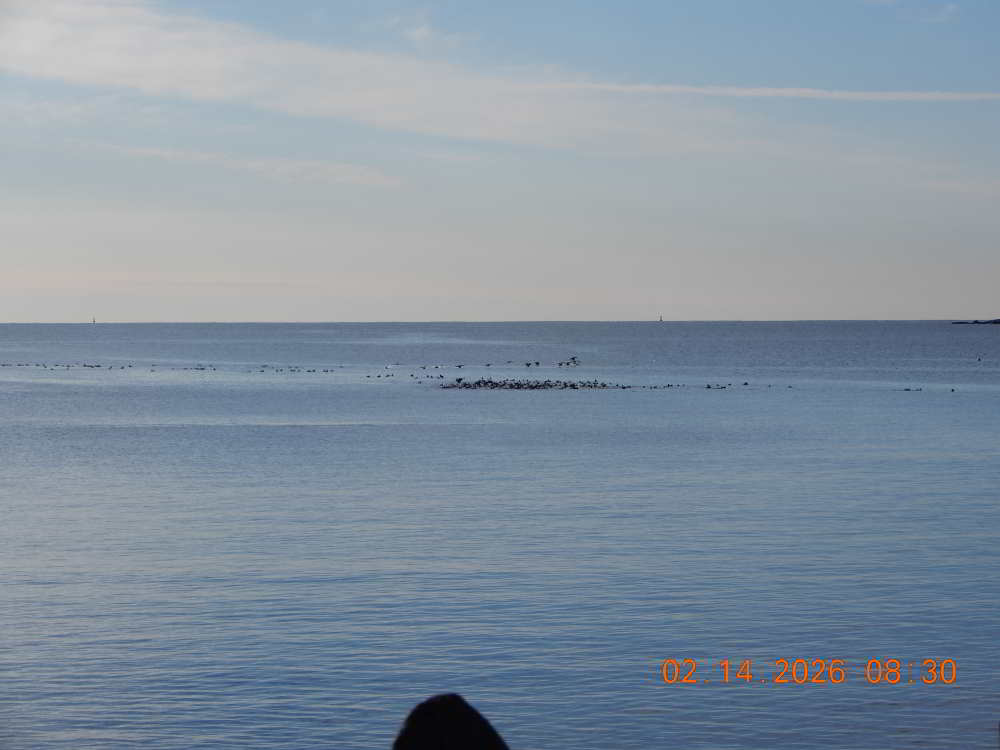
From where did this large number sea ducks originate – so suddenly and in such large numbers? Are they migrating groups that spend their winter on shores further south of Maine? Is this a pit stop for them? How did they decide to land here?
Soon these sea ducks will migrate North, to their breeding grounds. The really big groups have already disappeared from our shores, leaving us with what appear to be the “regular” winter residents. Some eiders breed and nest here on Peaks Island. Are the eiders who breed here the same individuals we see all winter? Are they from flocks wintering south of here? Or both?
References:
All About Birds; Cornell Lab of Ornithology. February 2026.
Birds of the World. Cornell Lab of Ornithology. Online.
By: Patty Wainright and Valerie Kelly
Reviewed by: Sam Wainright


Acquiring, preserving, and stewarding open space for public use on Peaks Island.